November 15, 2026
- Running
- Recovery
- Research
MassageGunorIceAfterRunning:WhatHelpsSoreCalves?
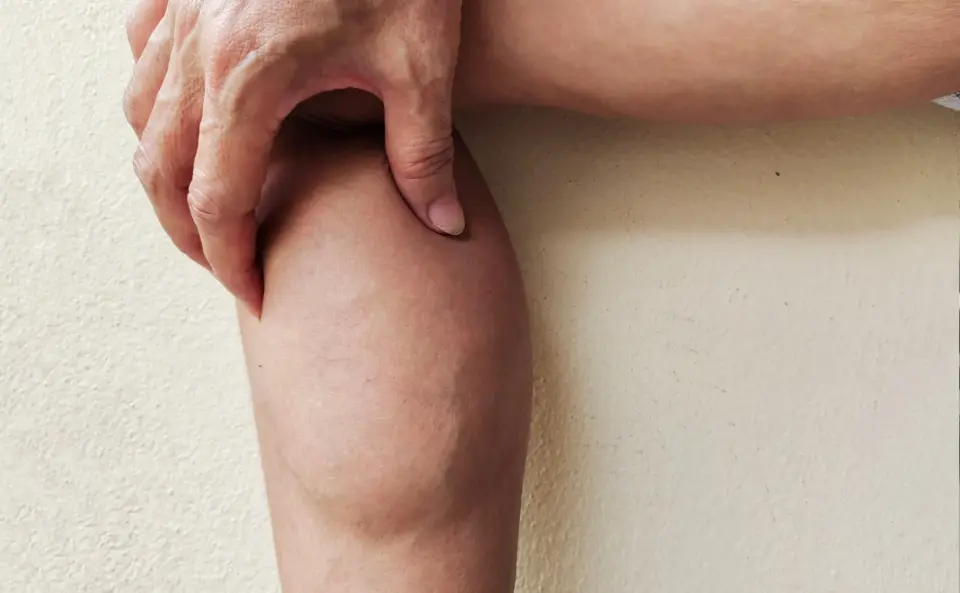
After a weekend long run or a hard workout, your calves often tighten up: stairs hurt, the Achilles feels tight, and your legs feel wooden. Many runners reach for a massage gun or ice, while others simply wait it out. A new randomized trial in recreational runners compared these options head to head.
How the trial worked
The study included 80 recreational runners aged 18–40 with at least three years of experience who ran at least three times a week and covered 60 km or more per month. Everyone did the same calf workload: 5 sets of 15 calf raises on a Smith machine with about 70% of body weight and a slow 3–4 second lowering phase. This kind of eccentric work reliably causes next-day muscle soreness.
Participants were then split into four groups of 20:
- Ice massage — three 3-minute rounds with 1-minute breaks per calf.
- Massage gun (percussive massage) — about 10 minutes per calf.
- Combination — 2 minutes of ice and 2 minutes of massage gun, alternated three times.
- Passive rest — no treatment.
Treatments started right after exercise and were repeated twice a day, for seven sessions over 72 hours. Participants were not allowed to run during this period.
What the results showed
- Soreness. At 72 hours, the rest group rated soreness at 1.5 out of 10, versus 0.5 after ice, 0.3 after the massage gun and 0.1 after the combination.
- Tissue stiffness. Ultrasound showed the calf muscle and Achilles tendon loosened noticeably faster in all active groups than with rest.
- Bounce. Reactive strength index (how quickly you push off after landing) recovered best with the combination, followed by ice and the massage gun; passive rest was last.
- Feeling recovered. Ice massage improved perceived recovery the most.
- Blood test. A marker of muscle stress (LDH) fell equally in all groups, so the treatments gave no advantage there.
Important caveats
The study was small and had no placebo treatment: participants knew they were being treated, and hands-on attention from a physiotherapist can reduce pain by itself. The workload was calf raises, not an actual race. The researchers did not show that the treatments speed up healing, prevent injuries or improve your next run. Large reviews of recovery in endurance athletes also find modest effects for most methods.
How to use it in practice
- Ice. Freeze water in a paper cup and massage the calf in circles for 2–3 minutes, then rest a minute; repeat 2–3 times. Keep the ice moving and don't leave it on bare skin for more than a few minutes.
- Massage gun. Use a medium speed and a soft head, glide along the muscle, not over bone or directly on the Achilles tendon. About 1–2 minutes per area; stop if you feel sharp pain.
- When it makes sense. After a long run, a mountain race, downhill running or unusual calf loading, when you want to ease stiffness before your next session.
- Don't replace the basics. Sleep, enough protein and a sensible training plan matter more than any gadget. Read how sleep helps your muscles in our piece on deep sleep and recovery, and strengthen your calves and Achilles in advance with 7 strength exercises for runners.
If you don't own a massage gun, there's no need to buy one for a single race: ice in a paper cup gave a similar effect and costs almost nothing.
If calf pain is sharp, comes with swelling or redness, or lasts more than a few days, or if you have circulation problems or reduced skin sensation, consult a doctor.